After the unexpected resignation of a 9th-grade English teacher, I found myself on a road I hadn’t expected to travel this school year.
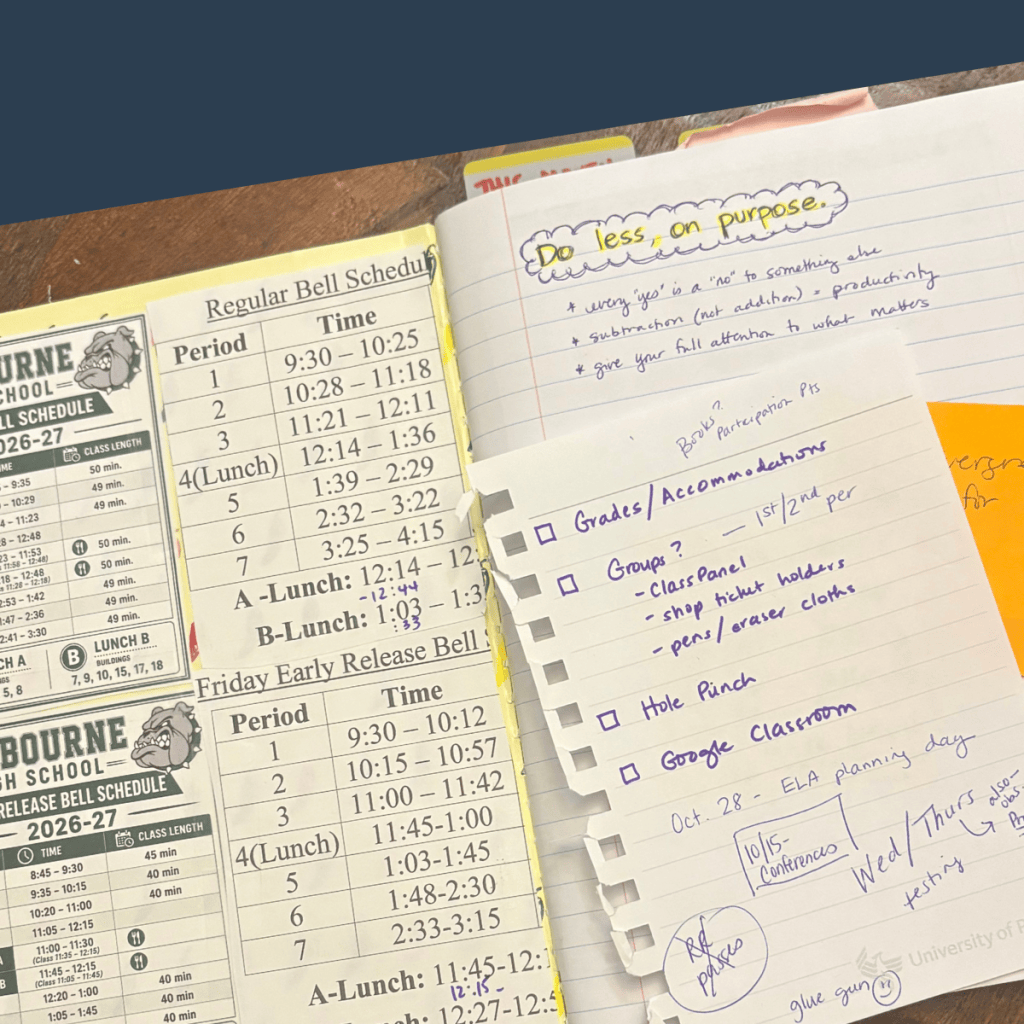
Especially ironic since, when my principal asked me about taking on four of those classes, I reminded him that my motto for this school year is “Do Less, On Purpose.” I actually read to him from the first page of my planner:
- Every ‘yes’ is a ‘no’ to something else.
- Subtraction (not addition) = productivity.
- Give your full attention to what matters.
So much for that.
Still, I’m glad I did it. I try to approach professional learning experiences with a personal challenge: look for the good. There’s bound to be something worth taking home—even from a less-than-engaging presenter, a topic I’ve seen before, or a district-mandated time-suck.
Surely four weeks back in the classroom would give me something worth taking home, too.
This week the new teacher is ready to take over, and I return to my regular role as literacy coach. After spending the last few weeks teaching The Odyssey, it feels appropriate to say I’m coming home from a journey—and I’m bringing some things back with me.
My souvenirs?
Some of them are little reminders of lessons learned long ago:
- glue guns as the solution to Florida humidity and concrete-block walls
- Dollar Tree kitchen containers and gift-wrap boxes as catch-alls for the little things you need to keep classrooms running smoothly–Band-aids, Tide pens, Post-its, glue sticks, and colored pencils
- systems for grading without drowning in papers
- the importance of talking to parents before there’s a problem
But I’m also bringing back a renewed appreciation for just how much teachers are holding at once. The non-negotiables:
- learning intentions and success criteria for the district
- inquiry, ATL skills, and conceptual understandings for MYP
- state benchmarks, clarifications, and skills for the FAST test
I know they are all important, and I believe there is inherent goodness in all of them, but it’s hard to be a teacher, standing in front of kids, juggling these initiatives all at once.
A new student arrives, and you’re figuring out how to help her put her binder in order and keep everyone else on task, moving forward, in line with the other classes.
And you’re interrupted. Again.
These weeks reminded me of the daily struggles of leading a classroom:
- keeping 25 students engaged while checking on the one who has stopped working
- adjusting lesson plans in real time, with an audience
- thinking about learning styles, behavior, missing assignments, parent emails and clear expectations (and taking attendance in the first 10 minutes because it’s FTE week)
- deciding when to hold the line and when a kid just needs a little grace
And somewhere in all of that, you’re supposed to teach.
None of this is new to me. I was a classroom teacher for a long time before I became a literacy coach. And I’ve jumped back in like this too many times to count. But something about this time felt different. I wasn’t just stepping back into the role of a classroom teacher; I was a coach, looking at the demands we place on our teachers.
And it’s surprisingly easy to forget just how heavy all of those little things become when you’re carrying them all at the same time.
That matters to me as I return to coaching.
There are a lot of good things happening in education right now. Good instructional practices. Good initiatives. Good strategies that can genuinely make a difference for kids.
But even a good thing is still one more thing when someone’s hands are already full.
Maybe one of the most important things I can carry back from these four weeks is the reminder that coaching shouldn’t always be about giving teachers something else to do.
Sometimes it should be about helping them figure out what they can put down. How they, too, can do less. On purpose.
Because ultimately, underneath the strategies and standards and initiatives, these are someone’s kids.
Someone has trusted us to help them learn and grow.
And teachers are carrying that, too.
Do less. On purpose. Give your full attention to what matters.


Leave a Reply