One of my favorite things about fall is college football. Auburn football, mostly, but I’m just as happy watching the feel-good stories on the pregame shows, seeing the fans, and cheering for whoever might beat Alabama or Georgia this week.
Last Saturday, before the Notre Dame–Miami game, I watched an interview with Jerome Bettis, the former Notre Dame player whose son now plays for the Irish.
Bettis was reflecting on the impact his former coach, Lou Holtz, had on his life—not just as a football player, but as a person. I immediately perked up when he recalled three questions Holtz taught his players:
Can I trust you? Are you committed? Do you care?
It’s been more than 30 years since Bettis played for Holtz, but those questions have stayed with him.
They’ve stayed with me, too.
I first encountered Holtz’s philosophy more than 20 years ago, not on a football field, but at a summer youth leadership experience where I was serving as a chaperone. The J. Kyle Braid Leadership Foundation used a video of Holtz to help teenagers understand leadership principles.
At the time, I made connections to my classroom, not leadership. I was teaching remedial reading to high school students who needed to improve their skills and pass a state assessment to graduate. Many had experienced years of frustration with reading. I wanted them to take risks, ask questions, make mistakes, and believe they could succeed. But none of that was going to happen unless they trusted me—and one another-–the way Holtz’s players did.
When I returned to my classroom that fall, I posted three rules above the board:
Do right. Do your best. Treat others the way you want to be treated.
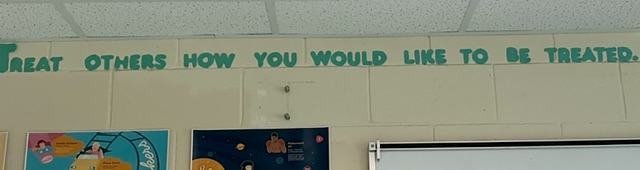
I’ve never been a “rules” kind of person. So, these simple precepts fit my belief that kids already know how they’re supposed to behave in school. What matters more is creating a classroom where we can make mistakes without embarrassment, encourage one another when things get difficult, and celebrate one another’s successes.
As I explained those rules to six classes of students each year–sharing how they came from a Notre Dame football coach and how they connected to my vision for our success–I began to realize that my job wasn’t so different from that of a coach.
I wanted a team.
Think about what great coaches ask of their athletes. They expect commitment, effort, accountability, and a willingness to do difficult things. And their athletes rise to their expectations.
Why shouldn’t we expect the same in our classrooms?
Sure, analyzing a character’s motives might not be as exciting as scoring a touchdown. But the skills students develop in our classrooms are every bit as important as those they learn on the field.
Great coaches understand that getting the best from their athletes requires more than telling them what to do. They build relationships, recognize individual strengths, establish shared goals, and help players believe they’re capable of more than they thought possible.
Why should classroom leadership be any different?
Over the years, I’ve carried that philosophy into every classroom I’ve taught in, whether we were preparing for a graduation test, finishing a novel, or solving a challenging word problem. My instructional strategies have changed, but my belief in the importance of giving every student a voice, recognizing what they can contribute, and building their confidence through working with others hasn’t.
And somewhere along the way, I realized Holtz’s philosophy wasn’t just about what I expected from my students. It was about what they should expect from me.
The three questions Bettis remembered are questions every teacher should consider:
Can my students trust me? Do they know I’m committed to their success? Do they know I care about them?
We spend a lot of time talking about classroom management—establishing expectations, maintaining order, and getting students to do what we ask. But maybe we should spend more time thinking about classroom leadership.
Because the goal isn’t simply to get students to follow the rules.
It’s to inspire them to accomplish things they might never have believed they could.
And that’s what great coaches—and great teachers—do.


Leave a Reply